
What Is Mock Trial? A Complete Guide for Students and Parents
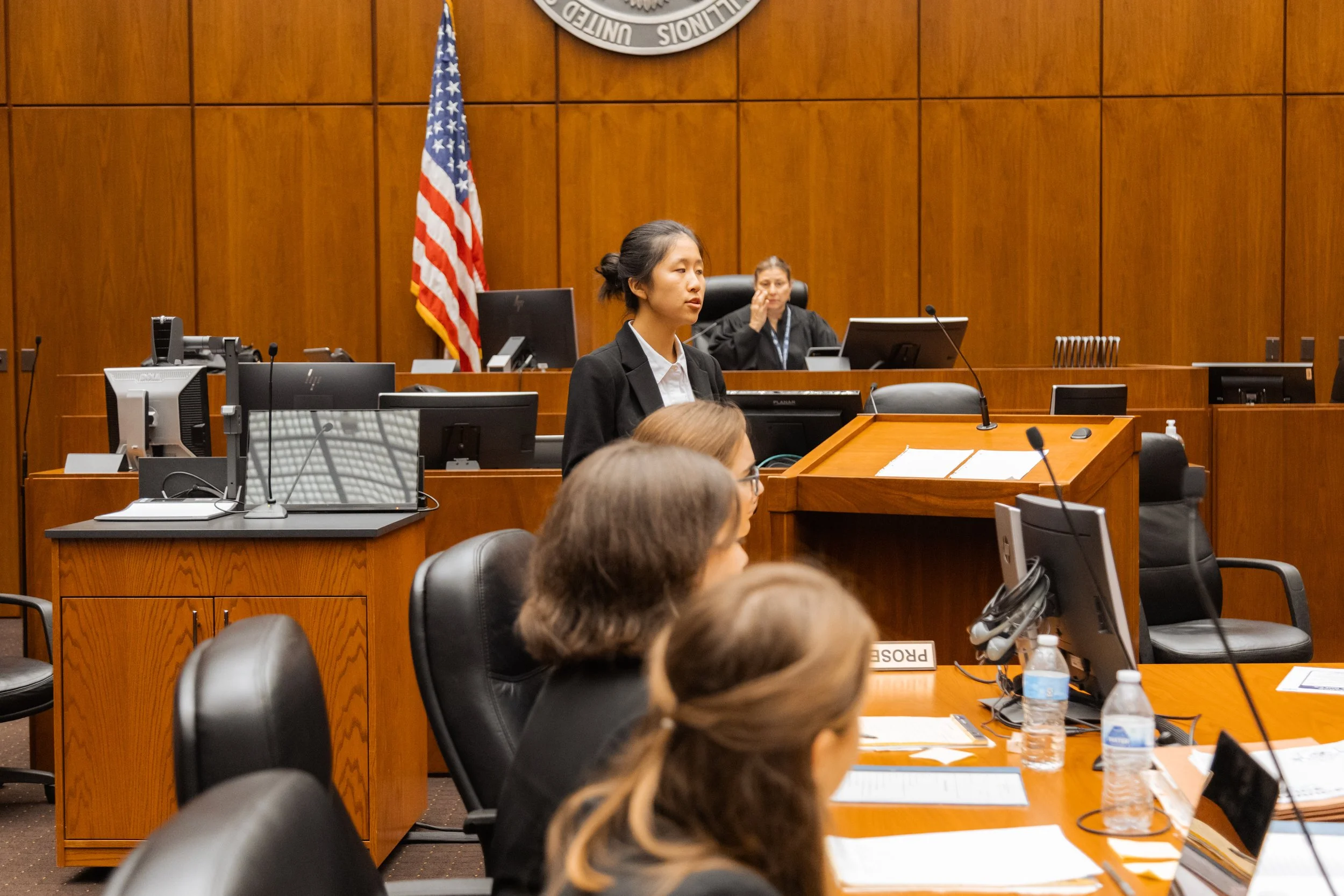
New to mock trial? This guide explains how mock trial works, what students do in competitions, and why it's one of the most skill-building extracurriculars available to young adults.
If you've heard the words "mock trial" and had a rough sense it involves pretending to be a lawyer, you're not wrong. But that framing sells it short. Mock trial is one of the few high school activities where students develop real, transferable skills under pressure, in a format that actually mirrors how professionals operate.
This guide breaks down what mock trial is, how competitions work, what students do week to week, and whether it's worth pursuing.
What is Mock Trial, Exactly?
Mock trial is a competitive academic activity where teams of students simulate real courtroom trials. Each team is assigned a legal case, which can be civil or criminal, and students take on the roles of attorneys and witnesses. They write opening statements, question witnesses, raise objections, and deliver closing arguments, all in front of a judge who scores them on their legal reasoning, presentation, and preparation.
The cases are fictional but based on realistic legal scenarios. Students typically receive the case materials weeks or months in advance and spend that time preparing their strategy, rehearsing their witnesses, and studying the law that applies.
At competition, two teams face off in a simulated courtroom. Real lawyers and judges often serve as evaluators. The scoring criteria vary by competition, but they generally reward strong argumentation, witness credibility, and courtroom procedure knowledge.
What Skills Does Mock Trial Build?
This is usually what parents want to know first, and it's a fair question for an activity that requires real time commitment.
The most obvious one is public speaking. Students learn to speak clearly and confidently under pressure, in front of judges and audiences, in a format that doesn't allow for notes or second takes. The improvement tends to be visible and fast.
Critical thinking is the less visible one, but it might matter more in the long run. Mock trial trains students to anticipate counterarguments, identify weaknesses in their own case, and respond to unexpected challenges without losing composure. That kind of thinking carries over well beyond the courtroom.
Students also develop research and writing skills through case preparation, an understanding of how the legal system works, and the ability to perform under genuine stakes. Competition day has real pressure. Judges ask hard questions. Witnesses get rattled. Learning to manage that, at sixteen, is not a small thing.
Finally, there's teamwork. Mock trial is a team activity. Wins and losses are shared. Students who perform well in competition are usually the ones who invested in their teammates' preparation, not just their own.
Inside a mock trial program, students take on one of two main roles: attorney or witness.
Attorneys handle the legal side. They write and deliver opening statements, conduct direct examinations of their own witnesses, cross-examine the opposing team's witnesses, raise objections during testimony, and give closing arguments. It's demanding work. A good cross-examination requires reading the room, adapting in real time, and knowing when to push and when to stop.
Witnesses take on characters from the case and must stay consistent under pressure. They memorize their witness statements, defend their character's version of events during direct examination, and hold up under cross-examination from opposing attorneys. The best witnesses are the ones who don't break. It takes composure.
In practice, both roles involve a lot of collaboration. Teams work together on case theory, debate the strongest arguments, and critique each other's performances before competition day.
Who Is Mock Trial For?
The honest answer is that it suits a wider range of students than most people expect.
The obvious fit is a student who likes debate, enjoys arguing, or has an interest in law. But mock trial also attracts students who are drawn to performance and want a serious outlet for it, students who are quietly analytical and want an activity that rewards preparation, and students who are looking for an extracurricular that has actual stakes and measurable outcomes.
It is not a good fit for someone looking for a low-commitment activity. Mock trial rewards preparation. The students who grow the most are the ones who take the case seriously outside of scheduled practice time.
How Does Evocation Academy Approach Mock Trials?
Evocation is a lawyer-led mock trial academy for middle-school students and older. The program runs year-round, which means students are building skill continuously rather than cramming before a single competition season. Classes are taught by practicing lawyers, not just former competitors, which shows up in how students learn to think about legal arguments rather than just how to perform them.
There's also a structured pathway for students who want to compete at higher levels, including international competitions. The program starts with a free online class, which is a low-friction way to see whether mock trial is a fit before committing to anything.
Ready to See What It's Like?
The fastest way to understand mock trial is to try it. Evocation Academy offers a free online class for new students. No experience needed. You'll get a real sense of how the program works, what a class looks like, and whether it's the right fit for you.
Register for your free class today!