
Debate vs. Mock Trial: What's the Difference (and Which One Is Right for You)?
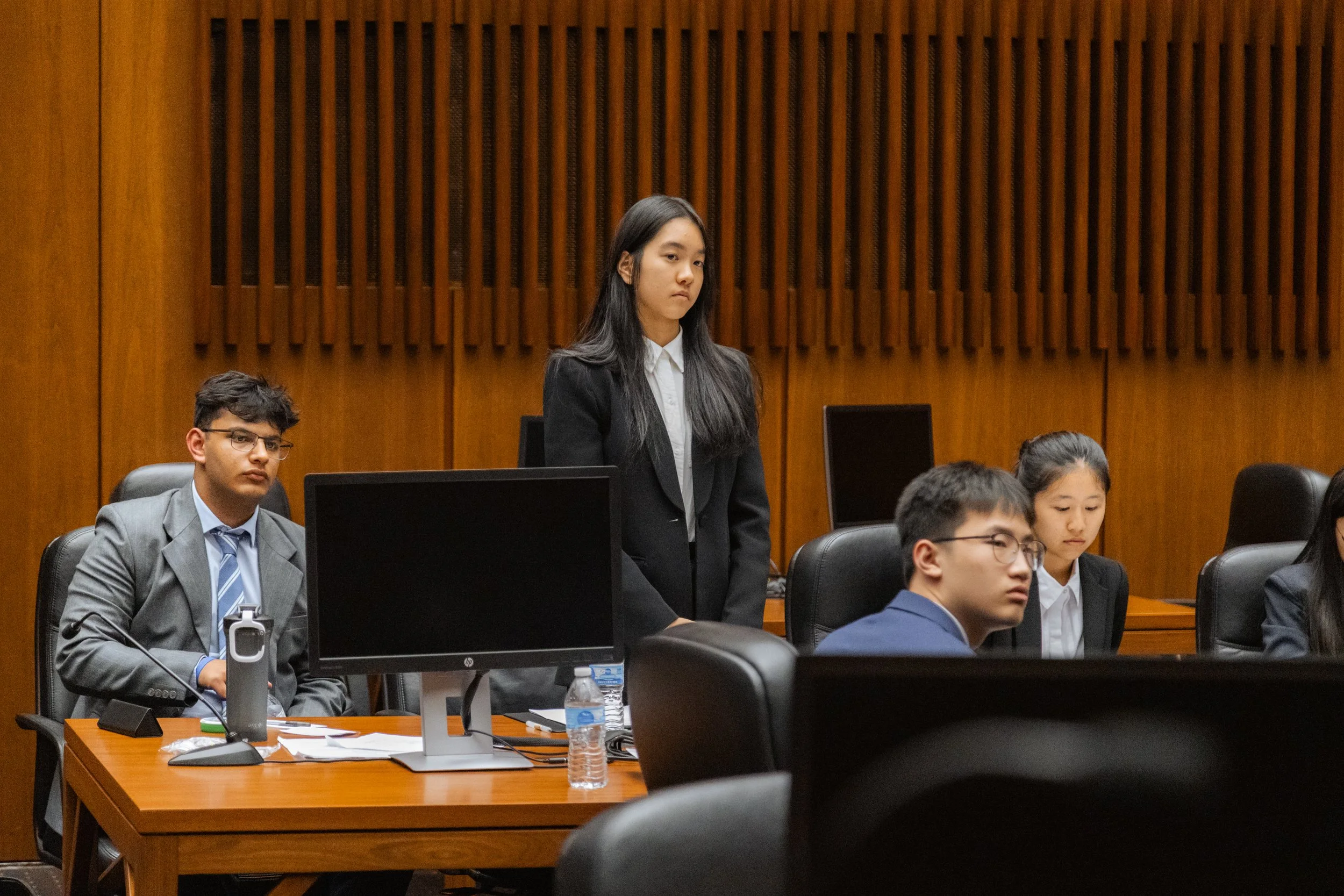
Debate and mock trial both build strong speakers, but they're different activities with different strengths. Here's an honest breakdown to help you decide which one fits your student best.
Students interested in competitive speaking often come to this question at some point: debate or mock trial? They're related, they share some audience, and from the outside they can look similar. Both involve structured argumentation, public speaking under pressure, and competing against other students.
But they're different activities that build different strengths, suit different personality types, and lead to different outcomes. This guide lays out the comparison honestly so you can make a good decision.
How Debate Works
Competitive debate comes in several formats, including British Parliamentary, Policy, Lincoln-Douglas, and Public Forum, but they share a common structure. Two sides argue opposing positions on a proposition or resolution. Students speak in turns, respond to each other's arguments, and are judged on the quality of their reasoning, evidence, and delivery.
One of debate's defining features is that students often argue both sides of an issue. In many formats, which side you're on is determined by a coin flip the day of the competition. That means the skill you're building is not the ability to defend a specific position, it's the ability to construct a persuasive argument from whatever materials you're given.
The subject matter rotates. Resolutions change from tournament to tournament and year to year, covering topics in politics, economics, ethics, and international relations. A strong debater can engage credibly with a wide range of topics on relatively short preparation.
How Mock Trial Works
Mock trial simulates a courtroom trial. Students receive a legal case with a set of fixed facts, a roster of witnesses, and evidentiary rules that mirror real legal procedure. Teams are assigned to prosecute or defend, and they prepare their entire strategy around the specific facts of that case.
Competition involves attorneys examining and cross-examining witnesses in front of a judge evaluator. Students raise objections, respond to them, deliver opening statements and closing arguments. The judge scores based on legal reasoning, courtroom procedure, and the overall persuasiveness of each side's case.
The format is less abstract than debate. You're not arguing a general position. You're arguing a specific case, with specific witnesses, under the rules of evidence. The facts are fixed. What varies is strategy, preparation, and execution.
Where They Overlap
Both activities develop public speaking skills faster than almost any other extracurricular. The pressure is real in both, and that pressure is what drives the growth.
Both reward preparation. Improvisation helps, but students who do well in either activity are almost always the ones who have done serious work before competition day.
Students from debate communities often transition to mock trial and vice versa. The populations overlap heavily. If you've thrived in Model UN or debate, there's a reasonable chance mock trial will suit you too.
Where They Diverge
The core difference comes down to specificity versus breadth.
Debate trains students to engage with a wide range of topics at a high level, adapting their arguments to whatever resolution is on the table. It's an excellent activity for students who are intellectually curious across many domains, who enjoy policy and current events, and who want to develop broadly applicable rhetorical skills.
Mock trial trains students to go deep on a specific case, to understand legal procedure, to inhabit a role, and to perform under the scrutiny of real lawyers and judges. It rewards preparation, composure, and the ability to hold a consistent position under aggressive questioning.
There's also a difference in role structure. In debate, everyone argues. In mock trial, students specialize. An attorney develops different skills than a witness. That specialization means students build deeper mastery of specific competencies rather than a broader general skill set.
Finally, the professional context differs. Debate skills translate broadly across law, politics, business, and academia. Mock trial skills translate most directly into legal reasoning, trial advocacy, and the kind of structured argumentation that legal and quasi-legal environments require. For a student interested in law as a potential career path, mock trial offers a more specific and immersive introduction than debate does.
Which One Should You Choose?
There's no universal answer, but here are some useful signals.
Debate might be the better fit if you want to engage with a wide variety of topics, you enjoy current events and policy, you're comfortable with ambiguity, and you want to develop broadly flexible argumentation skills.
Mock trial might be the better fit if you're drawn to law or legal reasoning, you want a role-specific activity where you build deep mastery of a particular skill, you enjoy performance under specific constraints, or you want an extracurricular that develops courtroom-grade composure and preparation habits.
Some students do both. The activities are complementary, and students who have done competitive debate often find that their cross-examination and argumentation skills in mock trial are stronger for it.
What Evocation Academy Offers
Evocation is a year-round, lawyer-led mock trial academy for high school students. Classes are taught by practicing lawyers, which means the feedback students receive is grounded in how actual legal arguments work, not just how to win a competition. There's a structured pathway for students who want to compete, including at international levels.
If you're curious about what mock trial actually looks like in practice, the fastest way to find out is to try it. Evocation offers a free online class for new students, with no prior experience required.
Register for your free class and see for yourself.