
Opening Statements vs Closing Statements: What’s the Difference and Is One Better Than the Other?
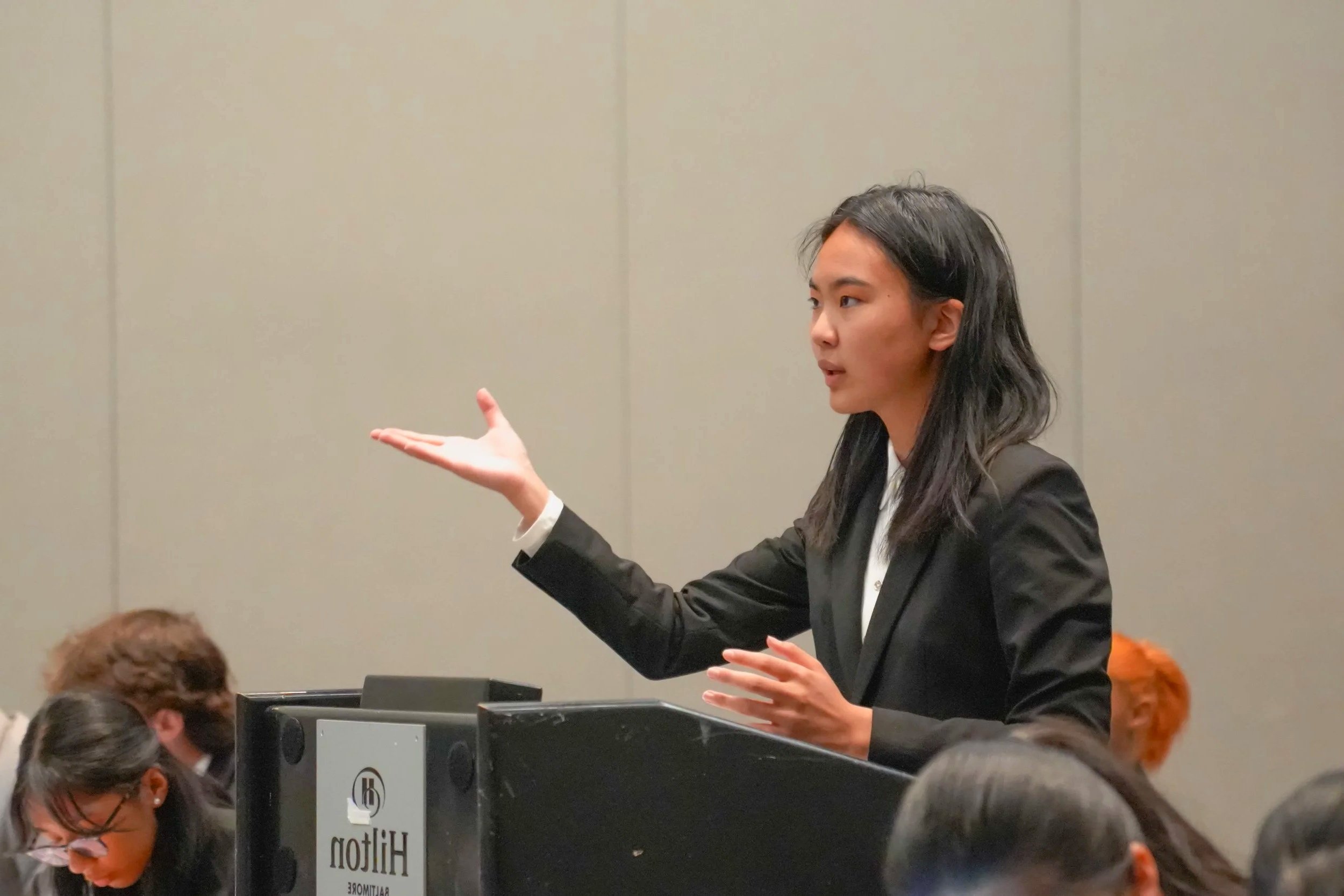
Opening and closing statements are both speeches and will be a requirement in every case of every competition. They are the sole moments where no one is to interrupt in the middle of, whether through objections or with questions.
The Opening Statement
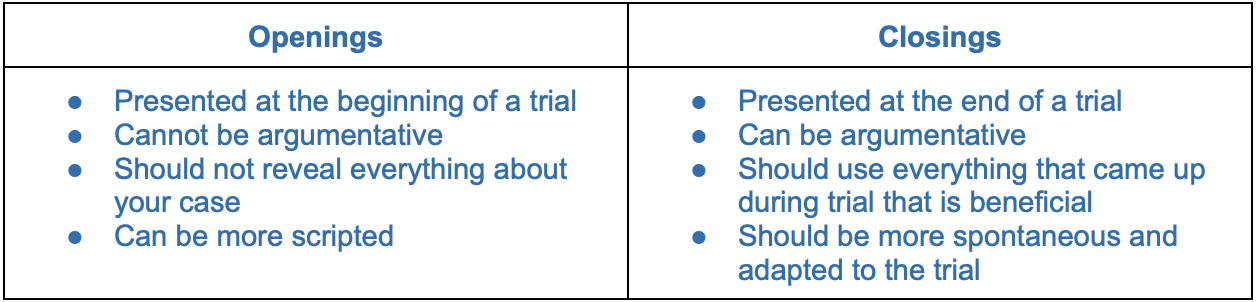
Openings are presented at the beginning and are intended to set the stage for your side of the story without being argumentative. The goal is to provide a general roadmap of your case with an introduction of your witnesses and the theme of your overall argument. However, it’s important to not give away everything in order to prevent opposing counsel from preparing counterarguments. For prosecution specifically, they have the additional responsibility of bringing forward the case law and what they have to prove in order to win.
The Closing Statement
Closings are presented at the end and are intended to wrap up your case, tying all the information into a bow and presented neatly for the jury to convince them of your story. These statements are allowed to be argumentative in order to make their point. A closing statement should emphasize the evidence brought up during trial that is beneficial to your side and harmful to the opposing side. It can also be beneficial to tie your closing to your team’s opening in order to show a cohesive story.
Summary of Differences Between Openings and Closings
Which is Better?
There is actually no answer to this question. It’s entirely dependent on personal preferences. Openings often mean that you are one of the first people speaking and you are responsible for first impressions on the jury. On the other hand, closings mean that you are one of the last people speaking and are responsible for the last impressions of your case on the jury. There is also less leeway for closings to be scripted as the progression of a trial does not always go as predicted.
So, depending on your preferences for speech styles and presentation, either openings or closings or even both could be the best fit for you.
Sign Up Today
Evocation Academy offers a free online mock trial class for new students. No prior experience needed. It's the fastest way to understand what the program is actually like and whether it's a fit for your student.
Book a free class today!