
Direct Examinations vs Cross Examinations: What’s the Difference and Is One Better Than the Other?
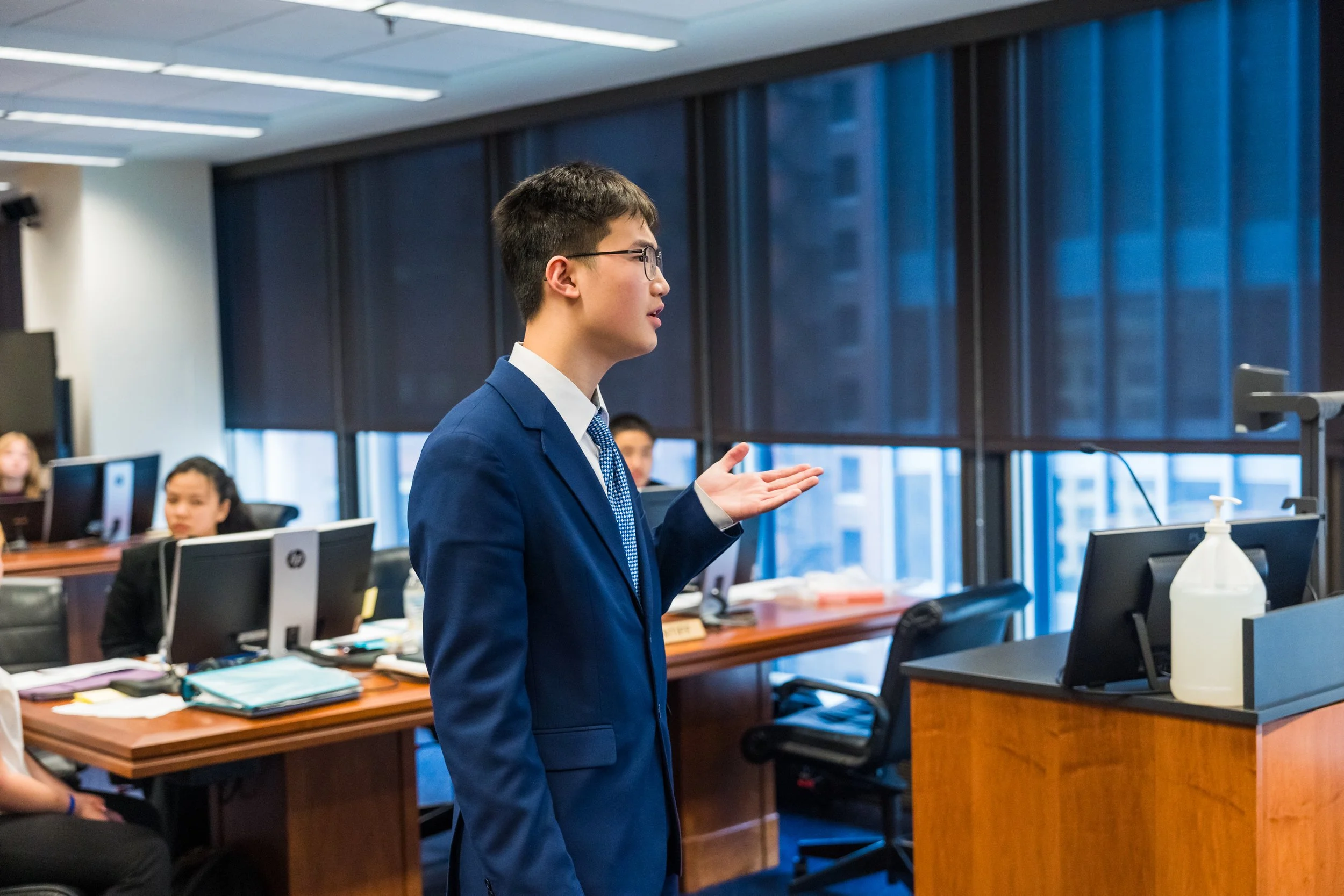
Directs and crosses are both examinations with lawyers asking questions and witnesses responding. In Mock Trial there are three direct examinations and three cross examinations for each side, both with its unique way of working with witnesses to get the information needed.
Direct Examinations
Directs are when lawyers work with witnesses on their own side of the case. In Mock Trial specifically, this allows for teammates to script and practice these examinations prior to competing, meaning that witnesses know what questions are coming and what answers need to be given. However, there can be exceptions to this in certain competitions: e.g. Empire Mock Trial which provides guest witnesses, random people from different teams, to play a certain witness.
The goal of a direct examination is to tell a story through the answers a witness gives. The questions asked have to be open ended in order for witnesses to remain uninfluenced when responding and to provide their most accurate perspective.
Cross Examinations
Crosses are when lawyers work with witnesses on the opposite side of their case. This means that the examination can be largely unpredictable as you cannot be positive what answer an opposing witness will give. The goal of a cross examination is to poke holes in the opposing counsel’s story. This means locking down your witness into only giving the information you want which is often done through asking leading questions that only offer yes or no responses.
In Mock Trial competitions, opposing witnesses can be particularly finicky as they attempt to avoid giving direct answers through adding additional information. Being able to control your witnesses shows that you are able to maneuver your questions to leave the witness with only your route as a viable path.
Summary of Differences Between Directs and Crosses

Which is Better?
Neither direct examinations, nor cross examinations are necessarily better. Both serve a unique function to your case: direct examinations allow you to tell your story while cross examinations allow you to break opposing counsel’s story. In the end, it comes down to personal preference. Some Mock Trial lawyers may prefer the challenge in locking down a witness on cross, while others may prefer the consistency of direct examinations.
Sign Up Today
Evocation Academy offers a free online mock trial class for new students. No prior experience needed. It's the fastest way to understand what the program is actually like and whether it's a fit for your student.
Book a free class today!